

 Feed back
 Privacy Policy
Finova
The American mortgage industry stands at a critical juncture, where traditional paper-based processes are being rapidly replaced by Digital mortgage platforms. These technological solutions address the persistent pain points of conventional home financing - excessive paperwork, weeks-long approval times, and frustrating back-and-forth communication. As we examine the Future of online mortgage applications, three disruptive forces emerge: the proliferation of Fintech innovation, widespread adoption of E-closing technology, and changing consumer expectations shaped by digital-native experiences.

Quicken Loans' Rocket Mortgage represents the gold standard for Digital mortgage platforms, processing over $300 billion in loans annually (2023 MBA data). Their platform demonstrates how AI-powered decision engines can reduce approval times from 50 days (traditional average) to as little as 8 minutes for qualified applicants. The secret lies in their proprietary algorithms that automatically verify income, assets, and employment through secure API connections with banks and employers.
The Mortgage Bankers Association reports that 63% of all mortgage applications now originate through Digital mortgage platforms (Q1 2024 data). This represents a 220% increase since 2019, confirming the irreversible shift toward the Future of online mortgage applications. Notably, Generation Z borrowers (ages 18-27) show 83% preference for digital-first lenders, while even Baby Boomers now complete 41% of mortgage processes online (J.D. Power 2024 Mortgage Digital Experience Study).
Modern Digital mortgage platforms leverage Fintech innovation to automate up to 87% of manual underwriting tasks (Ellie Mae 2023 Origination Insight Report). Machine learning models now analyze 1,200+ data points per application, including non-traditional credit indicators like rental payment history and utility bills. This expanded data access helps lenders approve 18% more qualified borrowers who might have been declined under conventional models.
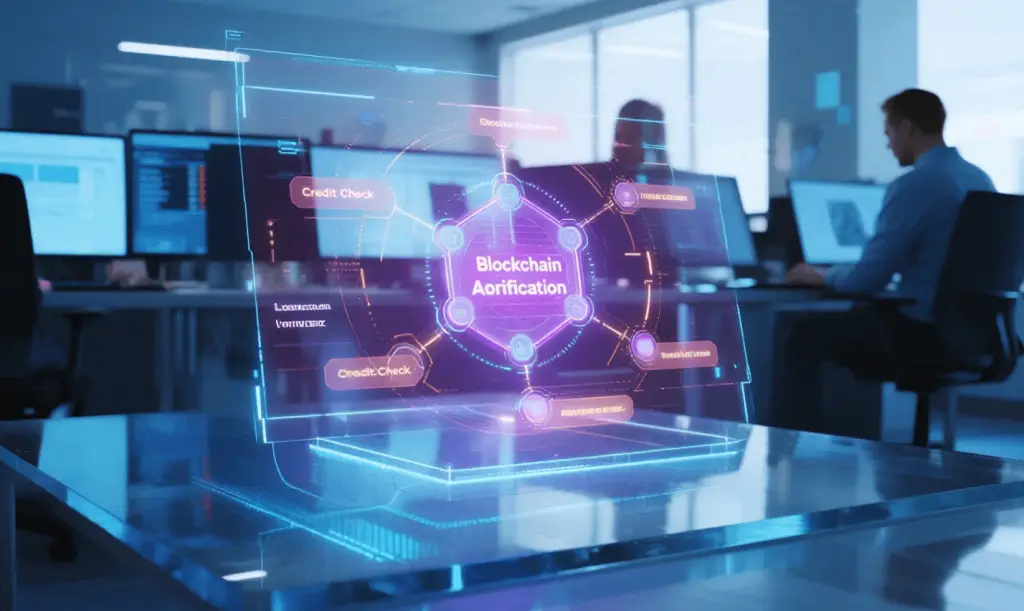
Pioneering Digital mortgage platforms are implementing blockchain solutions to combat mortgage fraud, which costs the industry $6 billion annually (FBI 2023 Financial Crimes Report). Figure Technologies' blockchain platform has reduced title search times from 7 days to 47 minutes while eliminating 92% of title defects. Such Fintech innovation not only enhances security but also creates an immutable audit trail for compliance with TRID and ECOA regulations.
E-closing technology represents the culmination of the digital mortgage journey, enabling borrowers to complete the entire process remotely. Notarize's platform demonstrates how RON (Remote Online Notarization) can reduce closing times by 8-12 days while decreasing errors by 67% compared to paper closings (Notarize 2024 Closing Efficiency Report). The integration of biometric verification and digital ink signatures ensures compliance with ESIGN Act requirements while providing superior convenience.
According to Freddie Mac's 2024 Digital Closing Survey, 78% of lenders now offer some form of E-closing technology, with hybrid closings (part digital/part paper) representing 54% of transactions. The clear leader is Texas, where 92% of residential closings incorporate digital elements (Texas Land Title Association). This rapid adoption correlates with a 38% reduction in post-closing disputes and a 41% improvement in customer satisfaction scores (Fannie Mae 2023 Servicing Benchmark).
As Digital mortgage platforms handle increasingly sensitive financial data, compliance with GLBA, FCRA, and state privacy laws becomes paramount. The 2024 IBM Cost of Data Breach Report reveals that mortgage companies investing in zero-trust architectures reduce breach costs by $1.2 million on average. Leading platforms now employ behavioral biometrics and continuous authentication to detect anomalies during the Future of online mortgage applications process.
The patchwork of state regulations presents the biggest challenge to E-closing technology adoption. While Virginia's RON laws enabled 83% digital adoption, states like Louisiana still require wet signatures for certain documents. The American Land Title Association reports that lenders operating nationally must maintain 47 separate compliance protocols to accommodate these variations, adding $12,000-$18,000 in annual compliance costs per state (ALTA 2023 Compliance Survey).
Are Digital mortgage platforms safe to use?
Yes, when choosing platforms compliant with SOC 2 Type II, AES-256 encryption, and NIST cybersecurity frameworks. Always verify the lender's security certifications before sharing sensitive information.
Will E-closing technology replace traditional closings completely?
Industry analysts project 65-70% of closings will be fully digital by 2027 (Mortgage Bankers Association forecast), but paper closings will persist for complex transactions and in certain jurisdictions.
How does Fintech innovation affect mortgage rates?
By reducing origination costs 30-40%, digital lenders can offer rates 12-25 basis points lower than traditional banks (FDIC Quarterly Banking Profile Q1 2024).
The convergence of Digital mortgage platforms, Fintech innovation, and E-closing technology has created an irreversible shift in the Future of online mortgage applications. As processing times shrink from weeks to days and approval rates increase through alternative data analysis, borrowers gain unprecedented access to home financing. While regulatory challenges remain, the industry's digital transformation continues accelerating, promising a more efficient, secure, and accessible mortgage landscape for all participants.
Disclaimer: The information provided about Digital Mortgage Platforms and related technologies is for general informational purposes only. It should not be construed as financial, legal, or professional advice. Readers should consult with appropriate licensed professionals before making any decisions regarding mortgage products or services. The author and publisher disclaim any liability for actions taken based on the content of this article.
James Carter
|
2025.08.06
